

Trading
Explorez une large gamme de marchés avec des prix compétitifs, une liquidité profonde et des outils de trading avancés.
En savoir plus 
Plateforme
Tradez en toute fluidité avec la plateforme puissante de TMGM, conçue pour la vitesse, la précision et une expérience de trading supérieure.
En savoir plus Plateforme de trading
Outils de trading
Académie
Apprenez les fondamentaux du trading avec des ressources adaptées aux débutants, incluant des guides, des webinaires et des analyses de marché.
En savoir plus Actualités et analyses
Obtenez des mises à jour de marché en temps réel et des analyses d'experts pour anticiper les opportunités de trading
En savoir plus Actualités et analyses
À propos
Découvrez ce qui distingue TMGM — notre présence mondiale, notre solidité réglementaire et notre engagement envers l'innovation dans le trading.
En savoir plus Pourquoi choisir TMGM
Crude Oil Price Forecast 2026: Fundamental & Technical Analysis
Key Takeaways
Oil still has short term support because supply remains constrained and the market is still pricing a geopolitical risk premium.
Technical analysis supports a cautious bullish view, with the recent pullback still holding above an important support zone.
Long term, oil prices are unlikely to remain at extreme levels forever if supply stabilizes or policy responses begin to cap the move.
There are many factors influencing oil prices in today's era, therefore we will approach this systematically, from Technical Analysis to Fundamental Analysis.

Technical Analysis: Crude Oil Forecast for 2026
Current State
From a technical point of view, oil has already shown the classic shape of a geopolitical spike: breakout, extension, then violent pullback.
Price Action
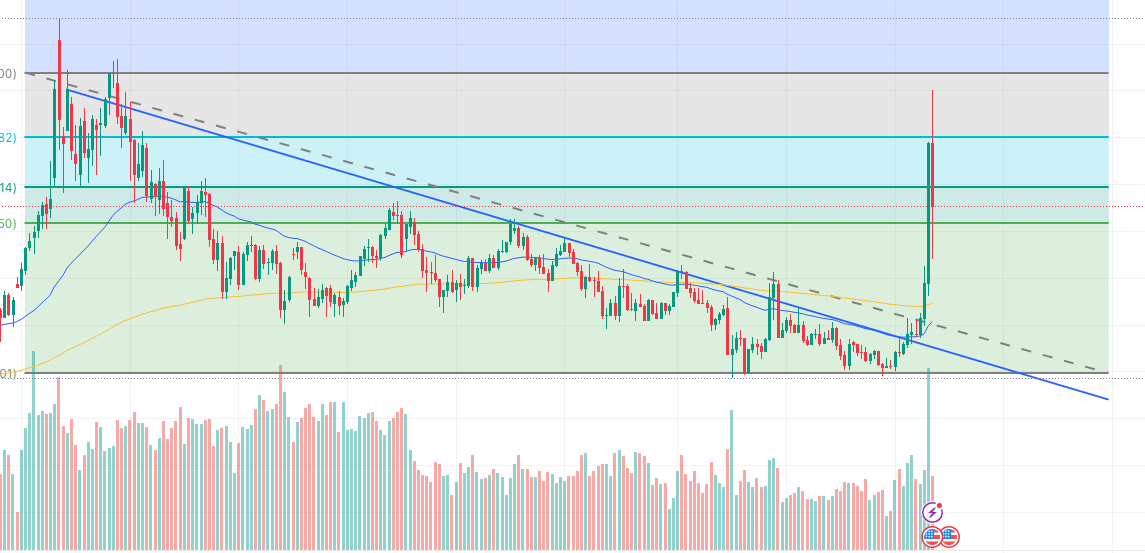
The price broke out of a Multi-Month Resistance with volume, and slightly retested on the support before breaking out to the current price.
From a pure price action and technical analysis point of view, after breaking out and retracing from a new resistance, it is generally expected to go sideways to gain more momentum before continuing or reversing.
Besides that, the fact that the latest candlestick showed an indecision of strong pressure from above and also strong buying momentum from below.
To conclude, a cautious bull case is maintained.
Support and Resistance (Fibonacci, Exponential Moving Averages 10, 50, 200 periods)
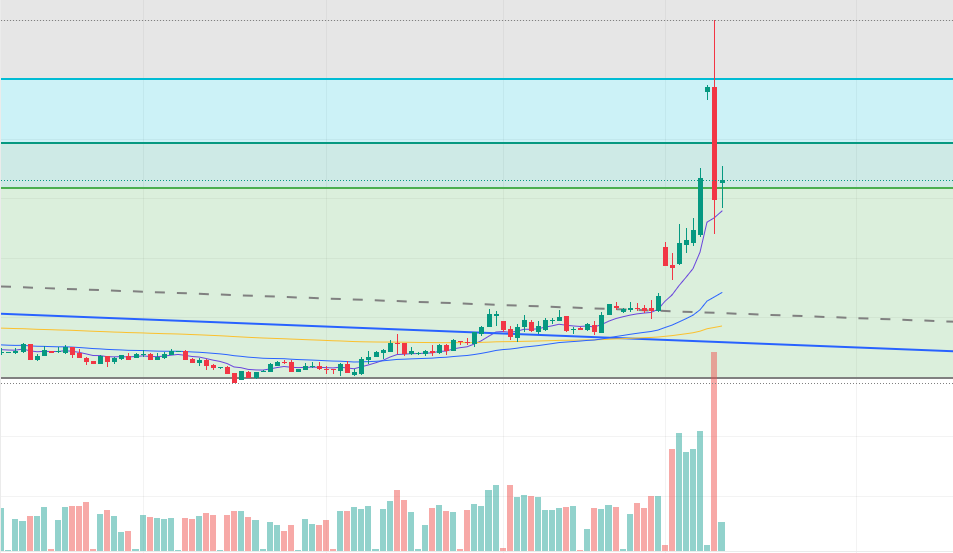
The recent spike zone around $115 to $120 is now the new major resistance area. On the support side, the $88-92 range is the new major support zone (Fibonacci and EMA 10). The price has met buying pressure around 88-90 and rebounded above the Fibonacci Support Line, showing a bullish Hammer Candlestick Pattern, hence the bull case remains intact currently.
If that support fails, the market may start pricing in de-escalation of the Iran US War.
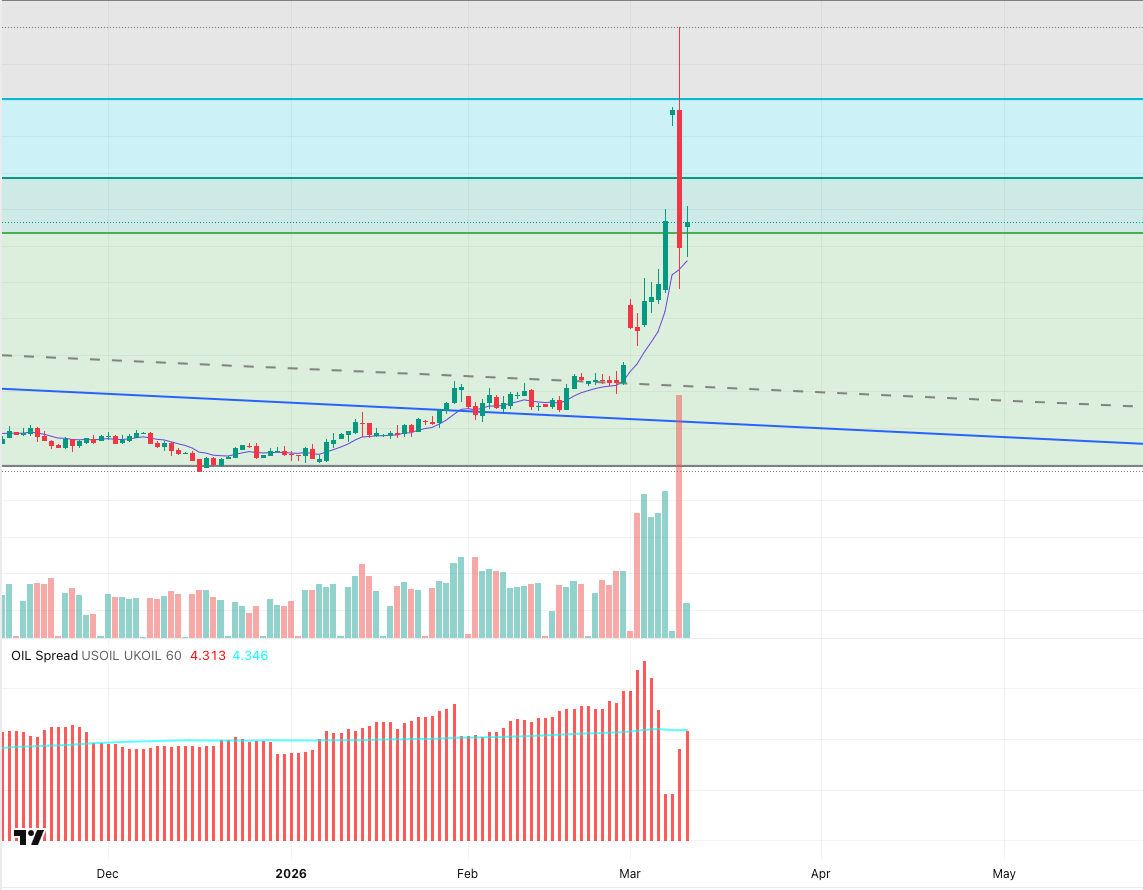
The Brent WTI Spread is telling a clear story. As the Oil Spread (Brent WTI Spread) increased during early March, before the breakout, there was a very obviously significant buying volume that accompanied the rally.
As the Brent WTI Spread cools off at the peak of the green candlestick on March 08, it hit the resistance and a massive pullback was printed next.
As of March 10, Brent WTI Spread has printed a rebound in the increase in spread again which further supports the short term bull case.
Crack Spread
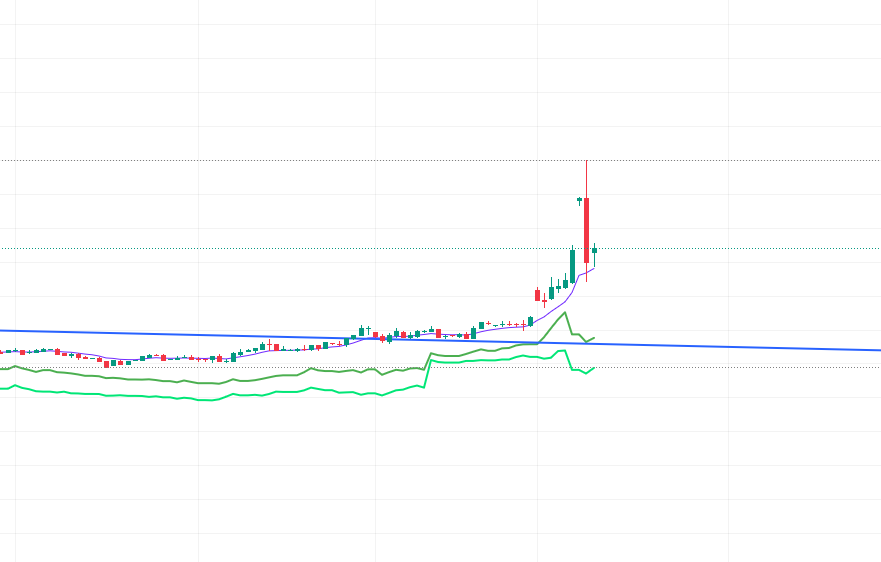
The current Crack Spread is showing a rebound after the initial dip. This coincides with the performance of Brent Crude Spread and is signaling a short term bull case as well.
Fundamental Analysis: What will oil prices be in 2026?
Current State
The current state is simple. Supply is constrained, the market is nervous, and near term prices remain supported.
Iran War Impact on Oil Price Outlook
The next question is whether Iran War impact on Oil stays a short term oil shock or becomes a broader economic problem.
Asia is likely to feel the squeeze first
Asian economies remain heavily exposed to Middle Eastern crude.
[As reported by TMGM Market News, Title: “Asian stocks fall on Iran war risks, South Korea’s Kospi leads losses”]
If Gulf supply stays disrupted, Asia would likely face higher import costs, refinery pressure, and faster inflation before the U.S. feels the full impact.
Governments have not capped the move yet
The G7 have discussed releasing strategic oil reserves and other coordinated intervention, but the current verdict is to not deploy the emergency reserve just yet. Until that happens, the market can continue to price at a war premium.
[As reported by TMGM Market News, Title: “G7, IEA reportedly considering joint release of emergency Oil reserves”]
The futures curve still points to a shorter term shock
The front of the curve is pricing immediate tightness. Later dated pricing is still lower. That suggests the market expects oil to normalize if supply routes reopen, reserves are used, or tensions ease.
Short Term Outlook
The short term outlook remains bullish.
If Gulf output stays disrupted and the Strait of Hormuz remains impaired, oil prices can stay high or rebound after the pullback. That supports the bull case for trading oil or buying oil now, but mainly as a short term position.
Long Term Outlook: Scenario 1
If oil supply continues to fall or remains unstable, prices can stay elevated long enough to damage the global economy.
The impact would likely begin in Asia because of its direct dependence on Middle Eastern supply. Over time, higher energy costs would pressure inflation, industrial output, and consumer demand. The U.S. may be less affected at first because it is also an oil producer, but it would not stay insulated if the disruption becomes prolonged.
Long Term Outlook: Scenario 2
If oil supply stabilizes, prices should ease.
This can happen in two ways. The first is that the war continues, but emergency reserves and policy action prevent the shortage from becoming permanent. The second is that tensions cool, shipping routes normalize, and supply stabilizes on a more durable basis.
In both cases, the longer term message is the same. Oil prices are unlikely to stay at extreme crisis levels forever.
One line takeaway
The short term crude oil outlook remains cautiously bullish, while the longer term direction depends on whether supply disruption persists or starts to ease.
Final Verdict: Crude Oil Outlook for 2026
In conclusion, crude oil can still remain supported in 2026, especially in the short term, because supply is constrained and the market is still pricing a geopolitical premium.
That said, this is not the same as saying oil will stay permanently extreme. If supply routes reopen, emergency reserves are deployed, or tensions begin to cool, the same forces that pushed prices up can also start pulling them back down. That is why the short term case remains bullish, while the longer term outlook stays more cautious and conditional.
ARTICLES POPULAIRES
1Silver Price Forecast: XAG/USD drops to near $60.50 amid surging oil, Treasury yields2PBOC sets USD/CNY reference rate at 6.7411 vs. 6.7399 previous3Canadian Dollar slumps to its lowest level since July 9, eyes 1.4200 vs bullish USD4NEAR Price Forecast: NEAR Intents blocks more than $50M in attempted laundering linked to Bitget exploit5WTI inches up above $92.00 on Qatari-mediated US-Iran talks, Saudi pipeline restart6RBA set to hike interest rate to 4.60% in September as inflation remains elevated7New Zealand Dollar steadies near its lows as RBNZ hike bets keep building8Iran’s Araghchi says if US wants deal or peace, Tehran has offered solution9Japanese Yen flatlines as Friday's rebound on Trump's concern holds
COTATIONS EN DIRECT


Commencez !
Inscrivez-vous et accédez aux Marchés Mondiaux en moins de 3 minutes

Connectez-vous avec Nous









Contacts
Téléphone: +61 2 8036 8388
Fax: +61 2 8036 8388
Email: support@tmgm.com
Web: https://www.tmgm.com



Les informations fournies sur ce site web sont de nature générale uniquement et ne constituent pas un conseil financier personnalisé. Avant d’agir sur la base de toute information figurant sur ce site web, vous devez évaluer la pertinence de ces informations au regard de vos objectifs, de votre situation financière et de vos besoins. Investir dans les CFD et les contrats de marge sur le Forex comporte des risques importants et ne convient pas à tous les investisseurs. Vous pouvez perdre plus que votre dépôt initial. Vous ne détenez pas, et n’avez, aucun droit de propriété ou intérêt sur l’actif sous-jacent. Nous vous recommandons de solliciter un avis indépendant et de vous assurer que vous comprenez pleinement les risques encourus avant de trader. Il est important que vous lisiez et preniez en considération le document d’information avant d’acquérir tout produit présenté sur le site web. Les informations et publicités proposées sur ce site web ne sont pas destinées à être utilisées par toute personne dans tout pays ou toute juridiction où une telle utilisation serait contraire aux lois et réglementations locales. Les Produits et Services proposés sur ce site web ne sont pas destinés aux résidents des États-Unis, de la Malaisie et de la Thaïlande.
TMGM est autorisé et réglementé dans diverses juridictions.
Trademax Australia Limited, opérant sous le nom de TMGM, est réglementé par l'Australian Securities and Investments Commission (ASIC), AFSL no. 436416 et est situé au Level 28, One International Tower, 100 Barangaroo Avenue, 2000 Sydney, NSW Australie.
Email: support@tmgm.com.au
Trademax Global Limited, opérant sous le nom de TMGM, est autorisé et réglementé par la Vanuatu Financial Services Commission (VFSC), numéro d'enregistrement 40356 et enregistré au 1276, Kumul Highway, Port Vila, Vanuatu, République de Vanuatu.
Email: support@tmgm.com
Trademax Global Markets (SE) Limited, exerçant sous le nom TMGM, est autorisée et régulée par la Financial Services Authority (FSA) des Seychelles, sous le numéro de licence SD224. La société est enregistrée au bureau n° 13, Providence Estate ABIS Centre, Mahé, Seychelles.
Email: support@tmgm.com
Trademax Global Markets (International) Pty Ltd, opérant sous le nom de TMGM, est autorisé et réglementé par la Financial Services Commission, Maurice (FSC) avec la licence no. GB22201012, et enregistré au 33, Edith Cavell Street C/o IQ EQ Fund Services (Mauritius) Ltd Port Louis, 11324 Maurice.
Email: support@tmgm.com
Copyright © TMGM. Tous droits réservés